Slow Kitchen Sink Drainage
Water lingering after normal sink use can indicate a developing restriction near the fixture or farther into the kitchen branch. Note whether one or both bowls drain slowly.
Kitchen Sink and Branch Drain Service
Bellevue Drain Cleaning Co. provides kitchen drain cleaning in Bellevue, WA for homes, rentals, managed properties, and commercial spaces. Call when a kitchen sink drains slowly, holds standing water, backs up during use, or sends water into the other bowl. Tell us which side is affected, whether a disposal is present, what triggers the backup, and what you have already tried. Emergency calls are available 24/7. Call (425) 307-0640 to confirm service availability and discuss the right starting point.
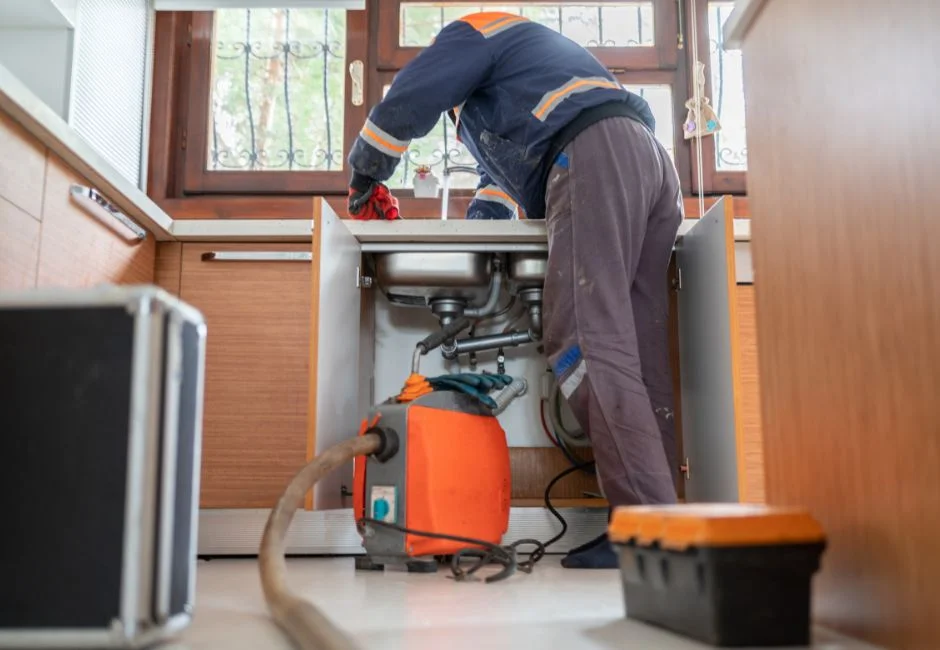
Kitchen drain cleaning addresses restrictions in the sink drain, nearby trap connection, or kitchen branch line. If the kitchen sink is the only affected fixture, the work can stay focused on that drainage path. When drains in other rooms react at the same time, broader Bellevue drain cleaning services may be needed to identify the affected shared line. Grease, food residue, and other buildup can contribute, but the symptoms do not prove what is inside the pipe.
The reported pattern, available access, and known pipe condition guide the starting point and suitable equipment. Cleaning can restore flow through a restriction, but it does not repair a broken, offset, or poorly sloped pipe. Residential and commercial customers can call to confirm the appropriate service scope.
Kitchen symptoms help identify a useful starting point, but they do not confirm the blockage material or pipe condition. Note which bowl is affected, what triggers the backup, and whether drains outside the kitchen react at the same time.
Water lingering after normal sink use can indicate a developing restriction near the fixture or farther into the kitchen branch. Note whether one or both bowls drain slowly.
A sink that will not empty limits normal kitchen use. Avoid repeatedly filling it and report whether the water level changes when another connected fixture runs.
Water moving into the other side of a double-bowl sink helps describe the drainage pattern, but it does not confirm the exact location or material causing the restriction.
If water rises when the dishwasher or disposal side is used, stop the appliance and report what happened. Drain assessment does not automatically include appliance repair.
Repeated restrictions may involve remaining buildup, limited access, or a pipe condition that changes the next step. Repeating the same method may not address the reason it returns.
A restricted sink or commercial kitchen grease line can interrupt cleaning, food preparation, or normal operations. Describe the affected equipment, access, and operating impact when calling.
Identifying the affected system helps avoid scheduling the wrong service for a sink, grease line, grease trap, or larger shared drain.
A problem limited to the kitchen sink often starts with the fixture path or kitchen branch. The sink configuration, affected bowl, nearby connections, and available access help identify where assessment should begin.
Commercial kitchen drain lines can collect fats, oils, grease, and food solids. Cleaning the drain line is different from servicing a grease interceptor, so describe the affected sink, line, or equipment when calling.
Grease trap cleaning removes accumulated fats, oils, grease, and settled solids from dedicated commercial equipment. It has separate access, waste-handling, service-scope, and scheduling requirements.
Several fixtures slowing together, toilet gurgling, or water rising in a lower drain can point beyond the kitchen branch and require a different starting point.
The sink configuration, reported backup pattern, drain access, and pipe condition guide the recommended cleaning method.
Tell us which sink bowl is affected, whether a disposal is present, what triggers the backup, when it began, and which products or tools have already been used.
The sink setup, available access, symptom pattern, previous service history, and visible conditions help determine an appropriate starting point without assuming the cause.
Cable equipment can address many localized obstructions. High-pressure cleaning may suit certain grease or buildup in an appropriate line. Camera inspection may help when access, line size, and visibility make it useful.
After the approved cleaning, drainage is checked by running an appropriate fixture or controlled amount of water when conditions allow. Findings, observed limitations, and any recommended next step are then explained.
Kitchen drain cleaning is available for homes, rentals, managed properties, and commercial spaces throughout these Bellevue service areas.
Cost depends on drain access, the likely blockage location, previous clearing attempts, required equipment, and pipe condition. A general symptom is not enough to set an exact price. Describe what the sink is doing when you call and ask what the proposed work includes.
Professional service starts by reviewing the sink configuration, symptoms, access, and known pipe condition. Cable equipment can clear many localized obstructions. Hydro jetting may suit certain grease or buildup in an appropriate line, while a camera may help when access, line size, and visibility make inspection useful.
There is no single product or method that is right for every kitchen drain. The suitable approach depends on what is restricting the line, available access, and pipe condition. Avoid adding or mixing chemical drain cleaners when water is standing, and disclose any product already used.
The bowls of a double kitchen sink usually connect to the same drainage path. Water moving into the other bowl can indicate restricted flow beyond one sink opening. This symptom helps identify a starting point, but it does not confirm the exact blockage location or pipe condition.
A dishwasher releases water into the kitchen drainage path. If the line is restricted, that discharge may make water rise in the sink. Stop the dishwasher if water is backing up and describe the pattern when you call. The drain and appliance connection should be assessed before deciding the cause.
No. Kitchen drain cleaning addresses a sink drain, kitchen branch, or suitable commercial grease line. Grease trap cleaning removes accumulated fats, oils, grease, and settled solids from dedicated commercial equipment and has separate access, waste-handling, and scheduling requirements.
It can, but a kitchen-only symptom often points first to the sink or kitchen branch. A larger shared-line problem becomes more likely when toilets gurgle, several fixtures slow down, or water rises in a lower drain. Those patterns require a different starting point.
Yes. Bellevue Drain Cleaning Co. provides kitchen drain cleaning for residential and commercial properties. Commercial callers should describe the affected sink or grease line, property use, access, and operating impact so the required scope and current availability can be confirmed by phone.
The symptom pattern may point to a different drain, cleaning method, inspection, or equipment-specific service.
Recurring restrictions or documented pipe defects may require a scope beyond cleaning alone.
Slow or stopped tubs, showers, and bathroom sinks require fixture-specific assessment.
Several fixtures reacting together can indicate a larger shared building drain or sewer line.
Suitable lines with grease or wall buildup may benefit from controlled high-pressure cleaning.
Accessible pipe sections can be inspected when recurring trouble or suspected damage affects the next decision.
Commercial grease equipment requires a separate cleaning and waste-handling service scope.
You do not need to identify where the restriction is located before calling. Tell Bellevue Drain Cleaning Co. which sink side is affected, what triggers the backup, whether a disposal is present, and what you have already tried. Emergency calls are available 24/7, with current service availability confirmed by phone. Call (425) 307-0640 to discuss the appropriate next step.