If you are asking, “Why is my sewer line making noise?” pay attention to when the sound occurs and which fixtures react. Repeated gurgling, bubbling or glugging usually means air and wastewater are not moving through the drainage system in their normal pattern. The sound is useful evidence, but it does not identify a broken pipe or one confirmed cause by itself.
A single noisy sink presents a different pattern from a toilet that bubbles whenever the washing machine empties. If several fixtures are slow, gurgling or changing water level together, the shared drain path deserves attention. Professional main sewer line cleaning may be considered when an evaluation supports a shared-line restriction, but the appropriate next step depends on access, pipe condition and what the symptoms show.
Why Is My Sewer Line Making Noise When Water Drains?
Gurgling usually occurs when air is pushed or pulled through water held in a fixture trap as wastewater moves through connected piping. A partial drain restriction or disrupted venting can change pressure inside the system. The sound can help locate the affected area, but it cannot confirm the exact cause without further evaluation.
Every sink, shower, floor drain and toilet uses a water seal to separate indoor air from the drainage system. Plumbing vents help air enter or leave while wastewater moves. Official IAPMO venting guidance explains that venting protects fixture traps from siphonage and backpressure while maintaining air circulation throughout the drainage system.
When water has limited space to pass or air cannot follow its expected route, pressure may seek another path through a nearby trap. That movement can create a gulp, bubble or gurgle. It is reasonable to describe the pattern, but not to conclude from sound alone that roots, pipe failure or another specific defect is present.
Start With the Pattern: One Fixture or Several?
The number and location of affected fixtures provide more useful information than the volume of the sound. Use the comparison below as a way to organize observations, not as a remote diagnosis.
| What you notice | What the pattern may involve | Reasonable next step |
|---|---|---|
| One fixture gurgles | The fixture, its trap, nearby piping or local venting. | Note whether that fixture also drains slowly or changes water level. |
| Fixtures in one room react | A shared bathroom or kitchen branch, or its venting. | Record which fixture triggers the sound and which one reacts. |
| Several rooms are affected | A building drain, side sewer or another shared section. | Reduce unnecessary water use and arrange a broader evaluation. |
| Water or sewage rises | Restricted wastewater flow that has progressed beyond sound alone. | Stop using fixtures that add water and treat the situation as urgent. |
A lower fixture can react first because it provides an available route for displaced air or rising wastewater. For example, a toilet may bubble as a nearby shower drains, or a floor drain may make noise during laundry discharge. Those connections matter more than whether the sound is loud, soft or intermittent.
What Different Plumbing Noises May Indicate
Gurgling After a Fixture Drains
A sink, tub or shower that gurgles near the end of draining may have restricted flow or an airflow condition near that fixture. If the fixture also empties slowly, note both symptoms. A normal-looking drain that repeatedly gurgles when another fixture runs can point to a shared connection rather than a surface obstruction.
Toilet Bubbling When Another Fixture Runs
A toilet bowl provides an easy place to see pressure changes. Bubbles or water movement when a sink, shower, dishwasher or washing machine discharges can indicate interaction within connected drainage piping. Check whether other fixtures are also slow before assuming the toilet itself is defective.
Knocking or Banging in the Wall
A sharp bang when a faucet or appliance valve closes may involve the pressurized water-supply side rather than the sewer line. The timing is the clue. Gurgling usually follows drainage, while supply-pipe noise often occurs when water starts or stops. Describe that timing accurately when requesting help.
Dripping or Trickling When Fixtures Are Off
Persistent trickling can come from a running toilet, condensate discharge, a leak or another source unrelated to a sewer restriction. Look for a toilet tank that refills periodically or visible moisture without dismantling walls or fixtures. Do not group every plumbing sound under one diagnosis.
Does Sewer Line Noise Mean the Main Line Is Blocked?
No. Sewer line noise can occur with a local fixture condition, a partial branch restriction, disrupted venting or a wider shared-line problem. A main-line concern becomes more plausible when several fixtures in different rooms react, wastewater appears at a lower drain, or the same symptom returns after earlier cleaning.
The trigger also matters. A toilet that bubbles only when the bathroom sink drains may involve a shared bathroom branch. A lower drain that reacts whenever laundry empties sends a larger volume through the system and may indicate that the restriction is farther downstream. Neither pattern proves that the pipe is collapsed, offset or invaded by roots.
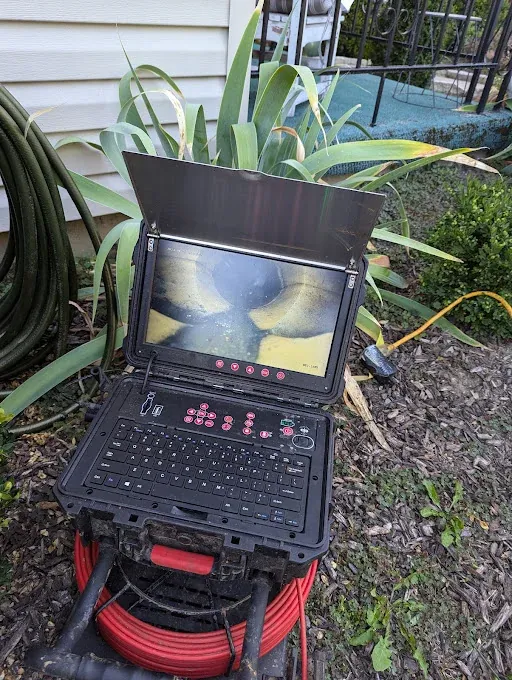
Pipe history, access and present flow determine what can be evaluated. Cleaning equipment may be appropriate for suitable obstructions. Camera inspection may be useful when access and visibility permit, particularly when symptoms recur or structural condition is in question. A camera documents visible accessible conditions; it does not clean a line or guarantee that every section can be viewed.
Safe Checks You Can Make Without Opening the Sewer
You can collect useful information without taking apart plumbing or exposing yourself to wastewater. Start with a written symptom pattern:
- Name the noisy fixture. Identify whether the sound comes from a sink, toilet, tub, shower or floor drain.
- Identify the trigger. Note whether flushing, laundry, a dishwasher or another fixture starts the noise.
- Check other fixtures visually. Look for slow drainage, bubbles or changing water levels without repeatedly sending more water into the system.
- Record recurrence. Note whether the sound is new, intermittent or returning after earlier drain work.
- Disclose products already used. Tell the provider about any chemical cleaner placed in the line.
Do not climb onto the roof to inspect a vent, remove a sewer cleanout cap that may be holding wastewater, or continue testing fixtures when water is already rising. Those steps can create fall, exposure or property-damage risks.
When Sewer Line Noise Needs Prompt Attention
A sound becomes more urgent when it is paired with evidence that wastewater cannot leave safely. Stop adding water and seek prompt help when sewage rises through a fixture, several drains slow or back up together, a lower drain changes level during normal use, or wastewater reaches an indoor surface.
The U.S. Environmental Protection Agency notes that sanitary sewer overflows can damage property and threaten public health. Avoid direct contact with wastewater and keep people and pets away from an affected area.
Local responsibility depends on where the problem is occurring. Bellevue Utilities says to call its Wastewater Operation and Maintenance Division when sewage comes up inside a home or business while no water, laundry or dishwasher is being used. Its Bellevue wastewater guidance directs customers with slow drainage or a suspected side-sewer blockage to a private service provider. That distinction helps avoid sending a private-line problem to the wrong responder.
How Professional Evaluation Narrows the Cause
A professional evaluation starts with the pattern, not a predetermined machine. The provider should ask which fixtures are affected, what activity triggers the sound, whether drainage is slow or rising, whether the issue has happened before and whether chemicals are present.
When conditions allow, controlled fixture use can help show how connected drains react. Safe access points and the pipe route are then considered. Cable or rooter equipment may suit some restrictions. Hydro jetting may be considered for suitable lines and buildup when access and pipe condition permit. Camera inspection may help document visible conditions after adequate access and visibility are available.
After approved work, the affected fixture or a controlled amount of water may be used to reassess present flow when conditions allow. That check confirms how the system behaves at that time. It should not be presented as proof that an uninspected pipe has no defect or that a recurring condition can never return.
Frequently Asked Questions
Why does my toilet gurgle when the sink or shower drains?
A toilet may gurgle when another fixture drains because moving wastewater is changing air pressure in a connected branch or drain line. A partial restriction or a venting condition can contribute. The pattern shows that the fixtures interact, but an on-site evaluation is needed to identify the actual location and cause.
Can a blocked plumbing vent cause gurgling drains?
Yes, restricted venting can affect air movement and pressure in a drainage system, which may produce gurgling or disturb a fixture trap. Similar sounds can also occur with a drain restriction. Roof access and vent work carry safety risks, so do not climb onto a roof to investigate the sound yourself.
Does gurgling always mean the main sewer line is clogged?
No. One gurgling fixture may involve that fixture, its trap, a nearby branch or venting. A main or shared-line concern becomes more plausible when several fixtures react together, a toilet bubbles as another appliance drains, or water rises at a lower drain. Those patterns still require confirmation.
Why are several drains gurgling at the same time?
Several drains may gurgle together when the affected fixtures share a restricted drain path or when airflow through the drainage system is disrupted. Note which fixture triggers the sound and whether water levels change. If drainage is also slowing or rising, reduce water use and arrange an evaluation.
Should I pour chemical drain cleaner into a gurgling drain?
Do not add a chemical merely because a drain gurgles. The sound does not identify the location or material involved, and chemicals may remain in standing water or expose anyone who later opens the line. Tell the service provider about any product already used before work begins.
Can a sewer camera identify the cause of the noise?
A sewer camera can show visible conditions in accessible pipe sections when the line has suitable access and enough visibility. It may reveal buildup, an obstruction or a structural concern, but the sound alone does not determine whether camera inspection is needed. Cleaning may be required before a useful view is possible.
Who should I call in Bellevue if sewage rises when no water is being used?
Bellevue Utilities instructs customers to call its Wastewater Operation and Maintenance Division when sewage comes up inside a home or business while no water, laundry or dishwasher is being used. For slow drainage or a suspected private side-sewer blockage, the City directs customers to a private service provider.
Use the Noise as a Clue, Not a Diagnosis
One noisy fixture, several connected fixtures and active wastewater rise require different responses. Record what triggers the sound, watch for slow drainage or changing water levels, and stop adding water if a backup begins. For Bellevue drain cleaning, call Bellevue Drain Cleaning Co. at (425) 307-0640 and describe the pattern. The Contact page remains available as a secondary option.